






Understanding taxation in the Philippines can feel overwhelming and overly technical, but its importance is nearly a consensus for everyone—whether an ordinary worker, small business owner, corporate manager, or foreign national with interests in the country. Taxes impact income, expenses, financial health, and all, while keeping the wheels of the economy turning.
This comprehensive guide to taxation in the Philippines breaks down the essential aspects of the country’s tax system—its legal foundations, national and local tax types, exemptions, incentives, recent updates, and other unique features that can be compared with systems in other countries.
Taxation in the Philippines: General Tax Structure
Generally, taxation in the Philippines follows a territorial tax system where the government imposes taxes on its resident citizens and domestic corporations (i.e., companies duly incorporated under Philippine laws) on income earned anywhere else in the world. Foreign corporations, foreign citizens, and non-resident citizens, on the other hand, are taxed only to the extent of income sourced from the country.
Tax Assessment and Collection Agencies
Tax assessment and collection are handled by two main government agencies—the Bureau of Internal Revenue (BIR) and the Bureau of Customs (BOC)—and the local government units (LGUs).
Bureau of Internal Revenue (BIR)
Under the Department of Finance (DOF), the Bureau of Internal Revenue (BIR), through its Revenue District Offices (RDOs), has the powers and duties to assess and collect national internal revenue taxes, enforce penalties and fines for violations of tax regulations, and implement the National Internal Revenue Code (NIRC) of 1997, as amended.
Bureau of Customs (BOC)
Another agency under the supervision of the DOF, the Bureau of Customs (BOC) stands out as the second-largest revenue-generating body by collecting customs duties and taxes imposed on imported goods as mandated under the Customs Modernization and Tariff Act (CMTA) (R.A. 10863).
Local Government Units (LGUs)
In addition to the two agencies, local government units (LGUs), which include barangays, cities, municipalities, and provinces, through their local treasurer’s offices, collect local business, real property, community, and other taxes allowed under the Local Government Code (LGC) of 1991, as amended.
Classification of Taxpayers in the Philippines
For the purposes of responsive tax administration, the Ease of Paying Taxes (EOPT) Act (R.A. 11976) provides the latest classification of taxpayers in the Philippines:
Group | Gross Sales |
Micro | Less than Three Million Pesos (PHP 3,000,000) |
Small | Three Million Pesos (PHP 3,000,000) to less than Twenty Million Pesos (PHP 20,000,000) |
Medium | Twenty Million Pesos (PHP 20,000,000) to less than One Billion Pesos (PHP 1,000,000,000) |
Large | One Billion Pesos (PHP 1,000,000) and above |
Legal Bases of Taxation in the Philippines
Taxation in the Philippines is governed by the 1987 Philippine Constitution and other laws, including the National Internal Revenue Code (NIRC) of 1997, the Local Government Code (LGC) of 1991, and the Customs Modernization and Tariff Act (CMTA), as amended.
1987 Philippine Constitution
Section 28 (1), Article VI of the 1987 Philippine Constitution provides that “the rule of taxation shall be uniform and equitable. The Congress shall evolve a progressive system of taxation.” This provision clearly sets out a policy that a sound taxation must be based on the taxpayer’s ability to pay.
National Internal Revenue Code (NIRC) of 1997
The National Internal Revenue Code (NIRC) of 1997, as amended, is the primary law governing internal revenue taxation in the Philippines. It outlines the rules for the assessment, collection, and enforcement of national taxes, which include income tax, value-added tax (VAT), excise tax, and documentary stamp tax, among others.
Local Government Code (LGC) of 1991
The Local Government Code (LGC) of 1991, or R.A. 7160, as amended, grants local government units (LGUs) the power to create their own sources of revenue and to levy taxes, fees, and charges to fund local development projects and basic services independently from the national government. The law outlines specific types of taxes that can be imposed by LGUs.
Tax Reform for Acceleration and Inclusion (TRAIN) Law
The Tax Reform for Acceleration and Inclusion (TRAIN) Law, or R.A. 10963, is a tax reform law enacted in 2017 to make the tax system simpler, fairer, and more efficient. It particularly lowers the personal income taxes for most workers while raising excise taxes on fuel, sugary drinks, automobiles, and other goods.
Corporate Recovery and Tax Incentives for Enterprises (CREATE) Law
The Corporate Recovery and Tax Incentives for Enterprises (CREATE) Law, or R.A. 11534, is another major tax reform enacted in 2021 and aimed at helping businesses recover from the impact of the coronavirus pandemic by reducing the corporate income tax rate from 30% to 25% for large corporations and to 20% for small and medium enterprises and by rationalizing the grant of fiscal incentives by making them more targeted, performance-based, and time-bound.
CREATE MORE Act
The CREATE MORE Act, or R.A. 12066, which was enacted in 2024, serves as an amendment to the original CREATE Law. It enhances and clarifies tax incentives for investors and exporters. It also reduces the corporate income tax to 20% for firms under the Enhanced Deductions Regime (EDR), increases allowable deductions—such as 100% for power costs—and further simplifies VAT zero-rating for directly attributable registered activities.
Ease of Paying Taxes (EOPT) Act
The Ease of Paying Taxes (EOPT) Act, or R.A. 11976, which was enacted in January 2024, aims to simplify tax compliance for businesses and individuals by introducing a tiered system based on taxpayer size, streamlining filing and payment processes, and reducing penalties for small businesses. Key provisions include the elimination of the annual registration fee, simplification of income tax returns, and unification of VAT invoicing requirements.
Customs Modernization and Tariff Act (CMTA)
The Customs Modernization and Tariff Act (CMTA), or R.A. 10863, which repealed the outdated Tariff and Customs Code of 1978 (P.D. 1464), governs and modernizes customs practices in the Philippines at par with the international standards, particularly the Revised Kyoto Convention on the simplification and harmonization of customs procedures.
Types of Taxes in the Philippines
In the Philippines, there are various types of taxes imposed on individuals, businesses, and transactions that generate government revenue and support public services both at the national and local levels.

National Taxes
National taxes in the Philippines are imposed by the central government under the National Internal Revenue Code (NIRC) of 1997, as amended. These taxes are collected by the Bureau of Internal Revenue (BIR) to fund nationwide programs and public services.
Corporate Income Tax
A Corporate Income Tax (CIT) is a direct tax imposed on the net income of domestic and foreign corporations, including partnerships (except general professional partnerships and other joint ventures), operating in the Philippines.
Under the CREATE Act, domestic corporations with net taxable income over PHP 5 million and total assets above PHP 100 million are taxed at 25%, while those below the threshold are taxed at a lower rate of 20%. Resident foreign corporations are generally taxed at 25% on income derived from Philippine sources.
Personal Income Tax
A Personal Income Tax (PIT) is a form of tax imposed on an individual’s income derived from employment, practice of profession, and engagement in trade or business, whether as a resident or non-resident citizen.
Based on the TRAIN Law, individual taxpayers earning an annual income of PHP 250,000 and below are exempt from income tax. In contrast, higher-income earners are taxed at rates ranging from 15% to 35% based on certain brackets, with the highest rate applicable to annual income exceeding PHP 8 million.
Net Amount of Taxable Income (Annual) | Income Tax Rate |
PHP 250,000 and below | 0% (Tax Exempt) |
Over PHP 250,000 – PHP 400,000 | 15% of the excess over PHP 250,000 |
Over PHP 400,000 – PHP 800,000 | PHP 22,500 + 20% of the excess over PHP 400,000 |
Over PHP 800,000 – PHP 2,000,000 | PHP 102,500 + 25% of the excess over PHP 800,000 |
Over PHP 2,000,000 – PHP 8,000,000 | PHP 402,500 + 30% of the excess over PHP 2,000,000 |
Over PHP 8,000,000 | PHP 2,202,500 + 35% of the excess over PHP 8,000,000 |
Value-Added Tax
A Value-Added Tax (VAT) is an indirect tax levied on the sale, barter, exchange, or lease of goods, services, properties (i.e., whether tangible or intangible), and imports. It can be applied to transactions at each stage of a sales cycle, i.e., from manufacturer or producer to final consumer.
Businesses with annual sales over PHP 3 million are required to register as VAT taxpayers. Currently, the standard VAT rate is 12%, applied at each stage of the distribution chain. Certain transactions, however, may be subject to 0% VAT or be exempt depending on the nature of the goods or services.
Percentage Tax
Percentage Tax (PT) is a business tax imposed on persons or entities who sell or lease goods, properties, or services in the course of trade or business whose gross annual sales or receipts do not exceed PHP 3 million and are not VAT-registered.
Calculated based on gross quarterly sales or receipts, the current rate for percentage tax under the CREATE Law is 3% (once reduced to 1% from July 01, 2020 to June 30, 2023).
Excise Tax
Excise Tax is a tax levied on goods manufactured or produced for domestic sale or consumption or for any other disposition, such as petroleum products, tobacco, alcohol, sweetened beverages, and automobiles; on goods imported; and on services performed in the Philippines.
Excise tax rates vary depending on the product. Under the TRAIN Law, for example, gasoline carries an excise tax of PHP 10 per liter, while sweetened beverages are taxed at PHP 6 to PHP 12 per liter depending on the type of the sweetener (e.g., purely caloric sweeteners or high fructose corn syrup).
Estate Tax
Under the Philippine law, an Estate Tax is a tax on the privilege of the decedent to transmit his or her estate at death to the lawful heirs or beneficiaries. With the TRAIN Law, the estate tax schedule has been simplified—from a six (6) – bracket schedule with rates ranging from 5% to 20% to a single flat rate of 6% based on the value of the net estate.
Donor’s Tax
A Donor’s Tax is a tax imposed on a donation, gift, and gratuitous transfer of property between two or more persons who are living at the time of the transfer, whether direct or indirect, and regardless of whether the transfer is in trust or otherwise. Currently, based on the TRAIN Law, the donor’s tax is at a flat rate of 6% of total gifts in excess for PHP 250,000.
Capital Gains Tax
A Capital Gains Tax (CGT) is a tax imposed on the gains presumed to have been realized by the seller from the sale, exchange, or other disposition of capital assets, including pacto de retro sales and other forms of conditional sale.
Capital gains tax in the Philippines applies at 6% on the sale of real property classified as capital assets, based on the higher of the gross selling price or fair market value, and at 15% on net gains from selling shares of stock not traded on the local stock exchange.
Documentary Stamp Tax
A Documentary Stamp Tax (DST) is a tax imposed on documents, instruments, loan agreements, and papers that evidence the acceptance, assignment, sale, or transfer of obligations or rights.
Under the TRAIN Law, documentary stamp tax rates have increased by 100% except those on debt instruments, policies of insurance, fidelity bonds, and other deeds. For instance, the current DST on the original issues of shares is PHP 2 for every PHP 200 or fraction of the par value. On sales, transfers, or agreements to sell shares, the DST is PHP 1.50 per PHP 200 or par value (or 50% of the original issue tax for no-par shares).
Customs Duties and Import Taxes
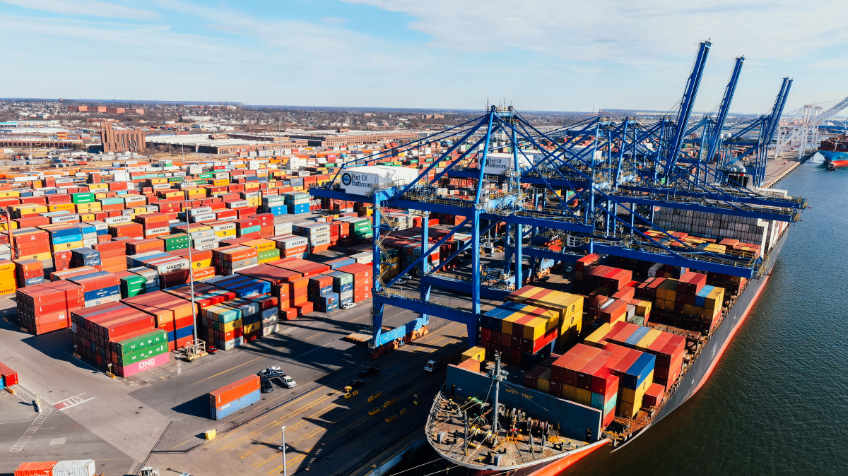
Custom duties and other import-related taxes are administered by the Bureau of Customs (BOC) primarily under the Customs Modernization and Tariff Act (R.A. 10863). Imported goods are generally subject to import duty, 12% VAT, and, in some cases, excise or ad valorem taxes — all calculated based on the landed cost (i.e., including the cost, insurance, freight (CIF), and other charges). Import duty rates typically range from 0% to 50%, depending on product classification, Harmonized System (HS) codes, and applicable trade agreements.

Local Taxes
Local taxes are taxes imposed by local government units (LGUs), such as barangays, municipalities, cities, and provinces, under the Local Government Code (LGC) of 1991 (R.A. 7160), as amended, to fund local development, services, and infrastructure projects.
Local Business Tax
A Local Business Tax (LBT) is a tax imposed on the gross receipts of entities doing business in the local government units (LGUs) (except those granted exemption) pursuant to the taxing power of the LGUs under the LGC.
Local business tax rates vary by LGU, based on their local tax code, and are typically fixed amounts or percentages of gross sales or receipts. Normally these range from 0.5% to 3%, as authorized by the LGC.
Real Property Tax
A Real Property Tax (RPT) a tax levied on real properties, such as land, buildings, machinery, and other improvements affixed or attached to real properties not specifically exempted under the law. It accrues on the 1st of January and is payable in one or four equal installments to the local government units (LGUs).
Real property tax rates vary by city or municipality, normally with up to a 1% rate for provinces and up to 2% for cities in Metro Manila (plus an additional 1% Special Education Fund (SEF) tax).
Transfer Tax
A Transfer Tax is a levy on property transactions imposed by the local government units (LGUs) where the property is located and paid by the buyer to officially record the change of ownership. Unlike the DST, the obligation rests firmly with the buyer, thus non-transferable. In Metro Manila cities, for instance, the transfer tax rate is at 75% of 1% of the property selling price, fair market value, or zonal valuation plus improvement, whichever is higher.
Professional Tax
A Professional Tax is a tax imposed by the local government units (LGUs) to persons engaged in the exercise or practice of a profession, pursuant to Section 139 of the Local Government Code (LGC) of 1991, as amended. Typically, the professional tax rate is up to PHP 300 per professional and paid annually (on or before January 31) to the LGUs, i.e., provinces and cities, where the professional practice is made.
Community Tax
A Community Tax, also known as a residence tax, is an annual tax paid by individuals and corporations residing or operating in the Philippines. This tax is primarily collected by the city or municipal treasurer, who then issues a Community Tax Certificate (CTC).
Generally, for individuals, the community tax is PHP 5 plus an additional tax of PHP 1 for every PHP 1,000 of income (capped at PHP 5,000), while corporations pay PHP 500 plus PHP2 for every PHP 5,000 of gross receipts (capped at PHP 10,000).
Amusement Tax
An Amusement Tax is another local tax imposed by provinces on proprietors, lessees, or operators of entertainment venues, including theaters, cinemas, concert halls, circuses, and boxing stadia. Certain cultural events, however, such as operas, classical concerts, art exhibitions, and literary presentations, are normally exempt. Pursuant to Section 140 of the Local Government Code (LGC) of 1991, as amended, the amusement tax rate can be up to 30% of gross admission receipts.
Environmental Tax
An Environmental Tax is a tax imposed by certain local government units (LGUs) or national agencies to address environmental concerns, fund ecological protection initiatives, and promote sustainable practices. In the Philippines, there is no specific environmental tax rate, but certain tourism areas impose fees between PHP 50 and PHP 150 per tourist.
Other Local Taxes
Section 129 of the Local Government Code of 1991 authorizes local government units (LGUs) to create their own revenue sources and impose taxes, fees, and charges, which shall accrue exclusively to them, in line with the policy of local autonomy. Other than the local taxes discussed, LGUs may also impose taxes on the business of printing and publication, franchise, quarry resources, and delivery trucks and vans.
Other Special Taxes
Apart from the national, local, and customs taxes, there are additional special taxes levied for certain purposes, such as for road use, travel, and extraction of forest resources.
Road User Tax
A Road User Tax, officially known as the Motor Vehicle User’s Charge (MVUC), is levied on owners of motor vehicles to fund road maintenance and safety. Collected by the Land Transportation Office (LTO), the tax amount depends on the type, weight, and use of the vehicle (e.g., PHP 1,600 for light passenger cars up to 1,600 kg).
Travel Tax
A Travel Tax is a levy imposed by the Philippine government on individuals who are leaving the country irrespective of the place where the air ticket is issued and the form or place of payment, as provided for by Presidential Decree (PD) 1183, as amended. Administered by the Tourism Infrastructure and Enterprise Zone Authority (TIEZA), standard rates are PHP 1,620 for economy class and PHP 2,700 for business class.
Head Tax
A Head Tax is levied on foreign nationals who have stayed in the Philippines for at least 60 days, hold permanent resident status, and are applying for a Re-entry Permit, which is paid to the immigration officer upon entry into the country.
Forest Products Tax
A Forest Products Tax is a special tax imposed on the extraction and removal of forest products such as timber, rattan, and bamboo from public forest lands. Administered by the Department of Environment and Natural Resources (DENR), the tax rate varies based on the type, volume, and classification of the forest product. It helps promote sustainable forest management and resource conservation.